
Johannes Brahms (1833 – 1897)
Trio for pianoforte, violin and Waldhorn op. 40 – 35’
Clarinet Quintet in B minor, op. 115 – 40’
Anima Eterna Brugge
- Orchester
Deutschland und diverse Länder
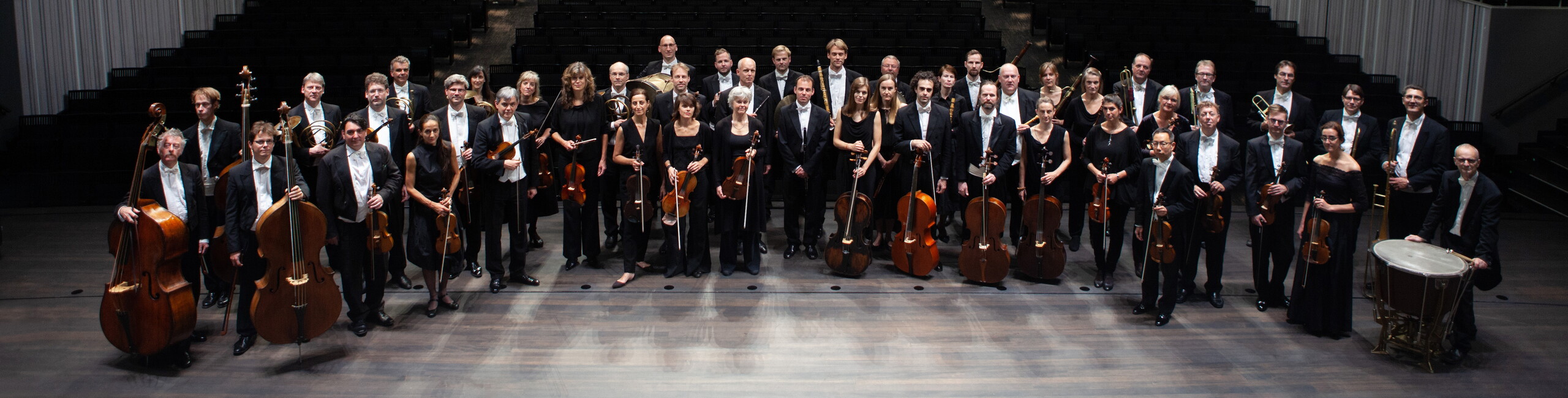
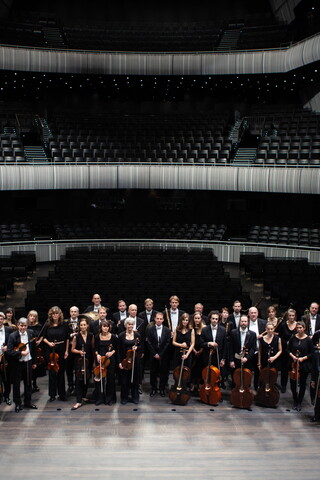
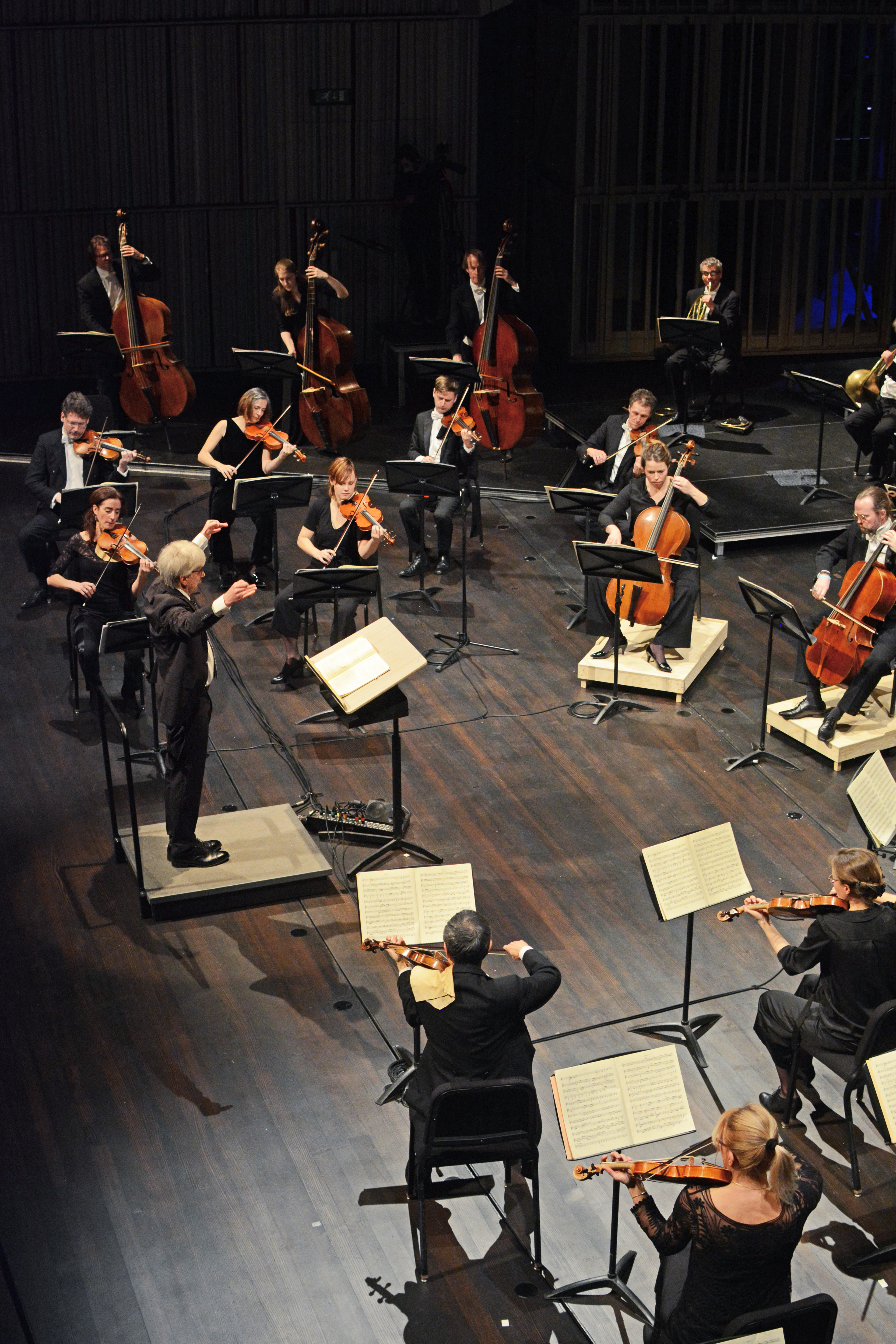
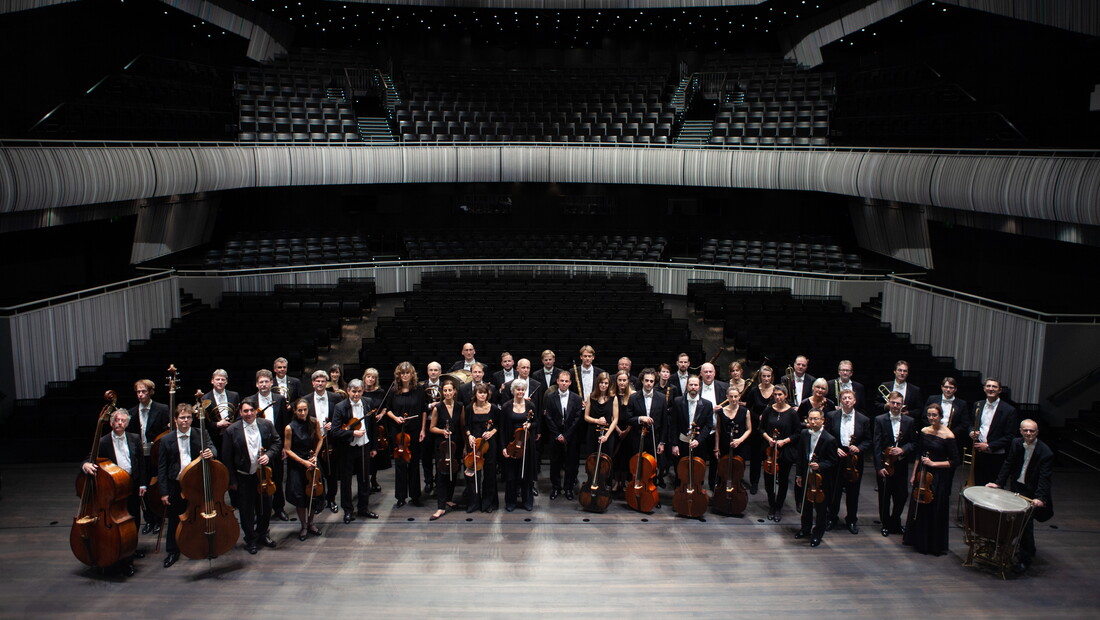
Anima Eterna Brugge ist ein internationales Orchester mit Sitz in Brügge, Belgien. Der Klangkörper ist auf Repertoire aus der Zeit zwischen 1750 und 1945 spezialisiert und kann je nach Repertoire seine Größe zwischen sieben bis zu achtzig Musikern variieren. Historische Aufführungspraxis ist der Schwerpunkt, der sich als roter Faden durch die musikalische Geschichte von Anima Eterna Brugge zieht. Jedes neue Projekt ist von einer Atmosphäre des Forschens, Entdeckens und künstlerischen Experimentierens geprägt. Seit 2020 arbeitet Anima Eterna mit vier verschiedenen Dirigenten zusammen, von denen jeder seinen eigenen künstlerischen Weg mit dem Orchester geht: Giovanni Antonini ist auf der Suche nach einem historischen Belcanto, Pablo Heras-Casado beschäftigt sich intensiv mit Anton Bruckner vor, Bart Van Reyn nimmt das Orchester mit in die Geburtsstunde der Sinfonie und Midori Seiler definiert den Klang der Romantik neu. Anima Eterna Brugge hat es sich zur Aufgabe gemacht, die künstlerische Forschung der Orchestermitglieder durch innovative Konzertformate wie Anima Insight und Atelier Anima aktiv auf der Bühne umzusetzen - sowohl in großen Konzertsälen als volles Orchester als auch in intimerem Rahmen mit Kammermusik.
mehrKontakt
Pressefotos
News
Projekte
-
Anima Eterna Brugge (7 Musiker) - Midori Seiler
Johannes Brahms
Programm:
Ansprechpartner:
- Tobias Weigold-Wimmer tobias@weigold-boehm.de +49 81 93 23 61 200
-
Anima Eterna Brugge (46 Musiker) - Alexander Melnikov (Klavier & Leitung)
Central European Landscapes - At the Heart of European Music
Programm:
Antonín Dvořák (arr. Josef Suk) - Auszüge aus Les Cyprès B.152 (Cypřiše)
Leoš Janáček - Concertino (1925)
Vítězslava Kaprálová - Partita für Streicher & Klavier solo (1939)***
Béla Bartók - Musik für Saiteninstrumente, Schlagzeug und Celesta (1936)At the Heart of European Music
Alexander Melnikov and Anima Eterna explore, on period instruments, three masterpieces that shape the musical landscape of Mitteleuropa at the time.It is first to 19th-century Czech music that Alexander Melnikov and Anima Eterna pay tribute at the outset of this journey. For Dvořák is undoubtedly the first to infuse a deeply Czech inspiration into the European musical spirit. Janáček’s Concertino is an ode to nature where horns become hedgehogs and clarinets squirrels, while owls sing at nightfall. The now-famous Partita Op. 20 by Kaprálová is the culmination of her work in Paris with Martinů, revealing the extraordinary talent of a composer whose life was tragically cut short. Finally, the Music for Strings, Percussion and Celesta stands as one of Bartók’s masterpieces. From its austere and somber opening fugue to its brilliant, folk-tinged finale, passing through its magical and evocative nocturne, it is an exceptional distillation of the composer’s artistry.
Ansprechpartner:
- Tobias Weigold-Wimmer tobias@weigold-boehm.de +49 81 93 23 61 200
-
Anima Eterna Brugge (46 Musiker) - Alexander Melnikov (Klavier & Leitung)
Central European Landscapes - At the Heart of European Music
Programm:
Antonín Dvořák (arr. Josef Suk) - Auszüge aus Les Cyprès B.152 (Cypřiše)
Leoš Janáček - Concertino (1925)
Vítězslava Kaprálová - Partita für Streicher & Klavier solo (1939)***
Béla Bartók - Musik für Saiteninstrumente, Schlagzeug und Celesta (1936)At the Heart of European Music
Alexander Melnikov and Anima Eterna explore, on period instruments, three masterpieces that shape the musical landscape of Mitteleuropa at the time. It is first to 19th-century Czech music that Alexander Melnikov and Anima Eterna pay tribute at the outset of this journey. For Dvořák is undoubtedly the first to infuse a deeply Czech inspiration into the European musical spirit. Janáček’s Concertino is an ode to nature where horns become hedgehogs and clarinets squirrels, while owls sing at nightfall. The now-famous Partita Op. 20 by Kaprálová is the culmination of her work in Paris with Martinů, revealing the extraordinary talent of a composer whose life was tragically cut short. Finally, the Music for Strings, Percussion and Celesta stands as one of Bartók’s masterpieces. From its austere and somber opening fugue to its brilliant, folk-tinged finale, passing through its magical and evocative nocturne, it is an exceptional distillation of the composer’s artistry.
Ansprechpartner:
- Tobias Weigold-Wimmer tobias@weigold-boehm.de +49 81 93 23 61 200
-
Anima Eterna Brugge (45 Musiker) & Midori Seiler (Violine & Leitung)
Celebrating Beethoven
Programm:
Maria Antonia Walpurgis; Ouverture zu Talestri, Regina delle Amazzoni (c. 1760): I. Allegro
Maddalena Sirmen (1745-1818): Duetto op 5 nr 1 in E Flat major
Regina Strinasacchi (1761-1839): Violin concerto B flat Major
Paul Wranitzky (1756-1808): Sinfonie C Major op.19 „the Emperors“, only Andante con moto and Finale: Presto
Pause
Wolfgang Amadeus Mozart: Ouverture „La Clemenza di Tito“
Ludwig van Beethoven (1770-1827): Symphony no 5 c minorThe other Vienna
This program features a well-known, an exceptionally famous piece from Vienna of the year 1808, when Beethoven was already on the peak of his fame. The four notes of the entry theme of his Symphony no 5 is maybe the most well-known classical melody of the world. Beethoven was a star in his chosen hometown Vienna, and many more musicians passed through this cultural centre of the Western world.
One of them was the young female violinist Regina Strinasacchi. As female visibility has been a great issue in the arts of the past centuries, her legacy was preserved mainly by a coincidence: Leopold Mozart in 1785 heard her concert in Salzburg and wrote a letter to his son Wolfgang. In this letter he describes Regina as a very skilful 23 year old violinist who plays with outstanding sentiment, beauty and sense, as to prove that women are capable of playing with stronger expression than men. Strinasacchi commissioned Wolfgang to write a sonata for her, the famous sonata KV 454, which the two of them performed together in Vienna (again, we have knowledge of this concert only by a letter from Wolfgang to Leopold). Regina was also a star at her time, despite of the moral standards at that time, when women were not supposed to be on a stage. (The only exception of this standard were singers, whose fame was paid for with a dubious reputation.) She composed several works, one remaining in the British Library is the manuscript of her violin concerto in B major, which Midori Seiler has copied and put in a modern writing.
Vienna was frequently visited by artists from England and Italy, but hardly any French composer came to visit, even if French music was played. So we can only speculate why Joseph Bologne, Chevalier de Saint Georges, who travelled extensively through his life, never paid a visit to the metropole, if for traditional reasons or because of his origin, being the son of a former slave from Guadeloupe in 18th century society. There is strong evidence that Saint George had personal contact with Haydn and even commissioned Haydn’s Paris Symphonies (Nr 82-87), when Saint Georges was the conductor of „Loge Olympique“ in Paris. Both Mozart, when travelling to Paris in 1778 and Saint George were long term guests at the very same apartment of Baron Melchior Grimm and Louise d’Epinay- so there is a possibility, that although Saint George never travelled to Vienna, he met two of the most influential Viennese composers of his time.
Ansprechpartner:
- Tobias Weigold-Wimmer tobias@weigold-boehm.de +49 81 93 23 61 200
- Julie Davidsen julie@weigold-boehm.de +49 81 93 23 61 208
-
Anima Eterna Brugge (45 Musiker) - Jos van Immerseel (Leitung) - Václav Luks (Leitung)
Happy Birthday Anima Eterna Brugge - 40 Years!
Programm:
Part 1 conducted by Jos van Immerseel & Part 2 conducted by Václav Luks
Jospeh Haydn (1732 - 1809), Symphonie Nr 53 „L’Imperiale“ - 22’
Franz Schubert, (1797 – 1828) Symphonie "die Unvollendete“ - 22’
INTERMISSION
Antonín Dvořak (1841-1904), Symphonie Nr 7 - 40’
This program is unusual in its composition with 3 symphonic works, but it uniquely demonstrates the orchestra's development. "Founder" Jos van Immerseel leads the first half with the repertoire that catapulted Anima Eterna to the top of the HIP movement (Historically Informed Performance Practice) in its early years: Viennese Classicism and Schubert.
In the second half, we arrive in the Late Romantic era to rejuvenate ourselves and lead the legacy of the research-driven, but legendary inspired playing style into the future with Antonín Dvořák and the remarkable Czech conductor Václav Luks. – Midori Seiler
Ansprechpartner:
- Julie Davidsen julie@weigold-boehm.de +49 81 93 23 61 208
- Tobias Weigold-Wimmer tobias@weigold-boehm.de +49 81 93 23 61 200